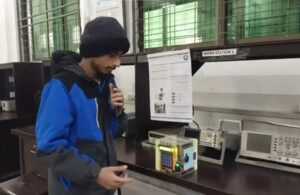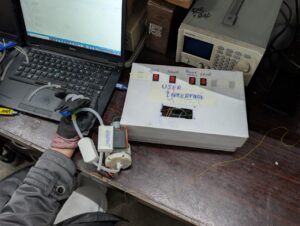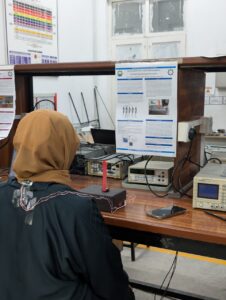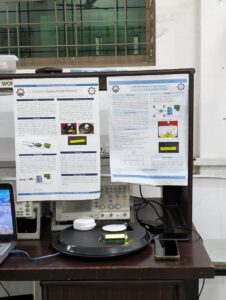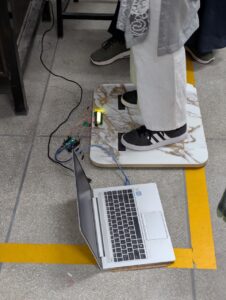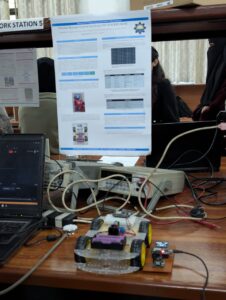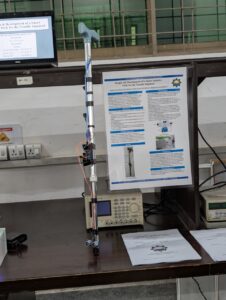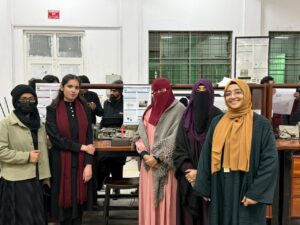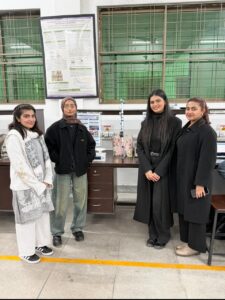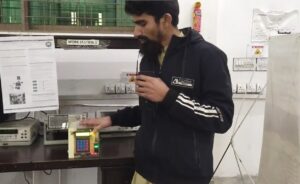
The Biomedical Engineering Department successfully organized the “CEA Activity of Microprocessor” on 1st January at the Microprocessor Systems Lab. This exhibition served as a platform for students to demonstrate their technical proficiency in embedding hardware and software solutions to solve real-world healthcare and security challenges. From assistive robotics to diagnostic sensors and IoT applications, the event highlighted the students’ ability to translate complex engineering theories into functional, innovative prototypes.
Event Highlights
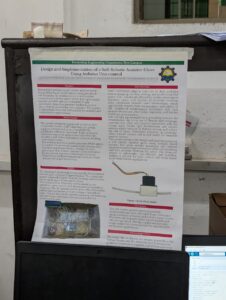
- Assistive Technologies: Students presented a Smart Assistive Stick for the Visually Impaired (utilizing ultrasonic sensors for obstacle detection) and a Soft Robotic Assistive Hand Glove designed for rehabilitation and movement support.
- Diagnostic & Health Monitoring: Key projects included a Digital Load Cell Weight Machine for accurate health monitoring and a Low-Cost Posture Detection System that provides real-time feedback to prevent musculoskeletal disorders.
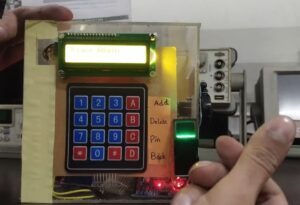
- Security & IoT Systems: Innovations such as a Biometric Security Vault (using fingerprint authentication) and a Wireless RC Car (powered by ESP32 and ESP-NOW protocol) demonstrated students’ mastery over advanced communication and security interfaces.
- Technical Rigor: Under the supervision of Lecturer Sir Farhan, the event emphasized the practical applications, fostering a culture of research and development.
Watch the Project Demonstrations:
- Biometric Security Vault: https://youtu.be/zqfcmktpIJg
- Soft Robotic Assistive Glove: https://youtu.be/GZta4IXL_kI
- Digital Weight Machine: https://youtu.be/QZ3Ke6ZmxTI
- Wireless RC Car (ESP32): https://youtu.be/8cQ4bU29ac0
- Smart Assistive Stick: https://youtu.be/9BhYfWzpL04
- Posture Detection System: https://youtu.be/Oj5uVZPFpx4
- Handheld ESP32 Gamepad: https://www.youtube.com/watch?v=V2o2-T2oCuM
#MicroprocessorSystems #BiomedicalEngineering #Innovation #EngineeringExhibition #STEM #StudentProjects #HealthcareTech #IoT #UETLahore